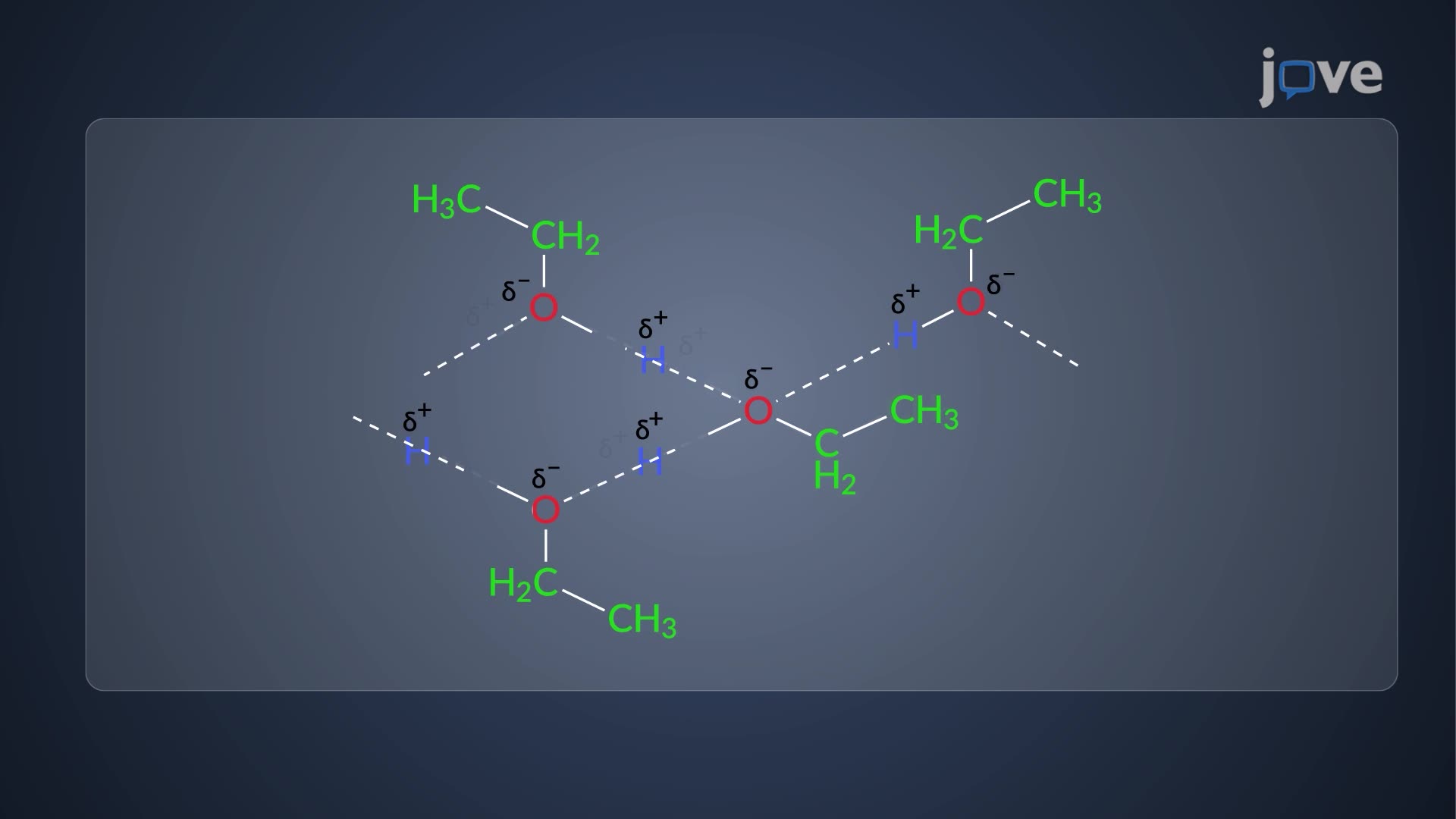
Silica gel column chromatography is a technique for separating compounds using a column packed with silica gel as the stationary phase. This method relies on differences in the polarity of compounds. Based on their polarities, compounds move between the stationary phase (silica gel) and the mobile phase (the solvent), forming discrete bands in the column.
Polar components tend to bind strongly to the silica gel, causing them to move slowly through the column. In contrast, nonpolar compounds bind weakly to the silica gel and often travel quickly because they have a greater affinity for the mobile phase.
The retardation factor (R) quantifies how much of a compound is present in a mobile phase compared to the total amount of the compound in both the mobile and stationary phase. Mathematically, R is defined as the distance a substance has moved from the original sample spot divided by the distance the mobile phase has moved. This ratio helps determine how well the components interact with the stationary versus the mobile phase.

Under the same conditions, R equals the Rf value observed in thin-layer chromatography (TLC). To determine R, scientists often perform TLC to assess the polarities of the compounds present.
Retention factor k is another crucial concept in chromatography. It indicates how long a sample stays in the stationary phase compared to the mobile phase. Mathematically, it can be expressed as the ratio between the adjusted retention volume and hold-up retention volume or the ratio between the adjusted retention time and hold-up retention time.

The adjusted retention volume VR'is the difference between the total retention volume VR and the hold-up retention volume. The hold-up retention volume is defined as the volume of the mobile phase required to elute the compound from the column completely

When the distribution constant is independent of the concentration of the compound, the retention factor is the ratio of the amount of the compound in the stationary phase to the amount of the compound in the mobile phase.

If the fraction of the compound in the mobile phase is considered as R, then 1−R is the fraction of the compound in the stationary phase.

Silica gel column chromatography separates compounds using a column packed with silica gel as the stationary phase.
For silica gel, affinity is strongly linked to polarity because it interacts with compounds by dipole-dipole interactions and hydrogen bonding through the –OH groups that form on its surface.
Polar compounds bind strongly to silica gel and travel slowly through the column; only a polar mobile phase can effectively compete with their strong affinity for silica gel.
Nonpolar compounds weakly interact with silica gel and travel quickly through the column.
A compound's affinity for the stationary phase is expressed by its retention factor, k, describing how long a solute is retained in the stationary phase relative to how long it spends in the mobile phase.
Under identical conditions, k is equal to the Rf of TLC. So, reconnaissance TLC is used to find conditions where the analytes' retardation factors are different enough to form well-separated bands.

 繁體中文
繁體中文