Derivatives
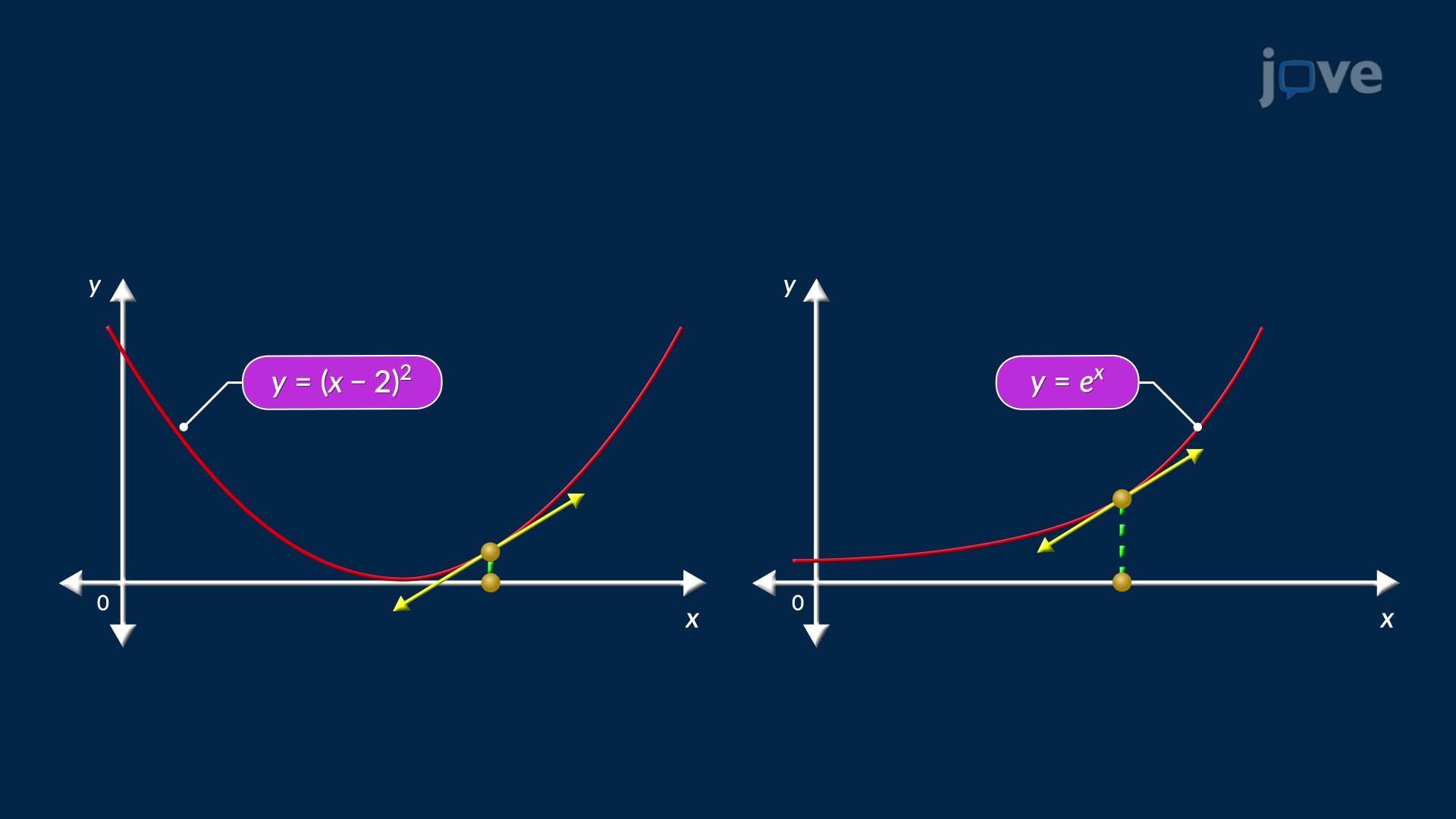
The concept of instantaneous rate of change is fundamental in both mathematics and physics, particularly in describing how a moving object alters its position with respect to time. This rate is captured mathematically through the derivative of a function. The derivative at a point represents the slope of the tangent line to the curve of the function at that point and quantifies how the function’s output changes per infinitesimal change in input.
Derivative of the Square Root Function
For the function,

determining the instantaneous rate of change involves calculating the limit of the difference quotient:

Direct simplification of this expression is challenging due to the radicals in the numerator. A standard algebraic technique to handle such cases is multiplying the numerator and denominator by the conjugate of the numerator. This rationalizes the numerator and results in:

This final expression gives the derivative f′(x) for all x greater than 0, indicating that the rate of change decreases as the input increases. For example, at x=1, the slope is 1/2. At x=4, it is 1/4, showing a diminishing sensitivity of the output to changes in the input.
Behavior at the Origin
At x=0, the derivative does not exist because the difference quotient fails to approach a finite limit. Graphically, this corresponds to a vertical tangent at the origin, indicating an abrupt change in direction. This point of non-differentiability highlights the importance of continuity and smoothness in defining derivatives.
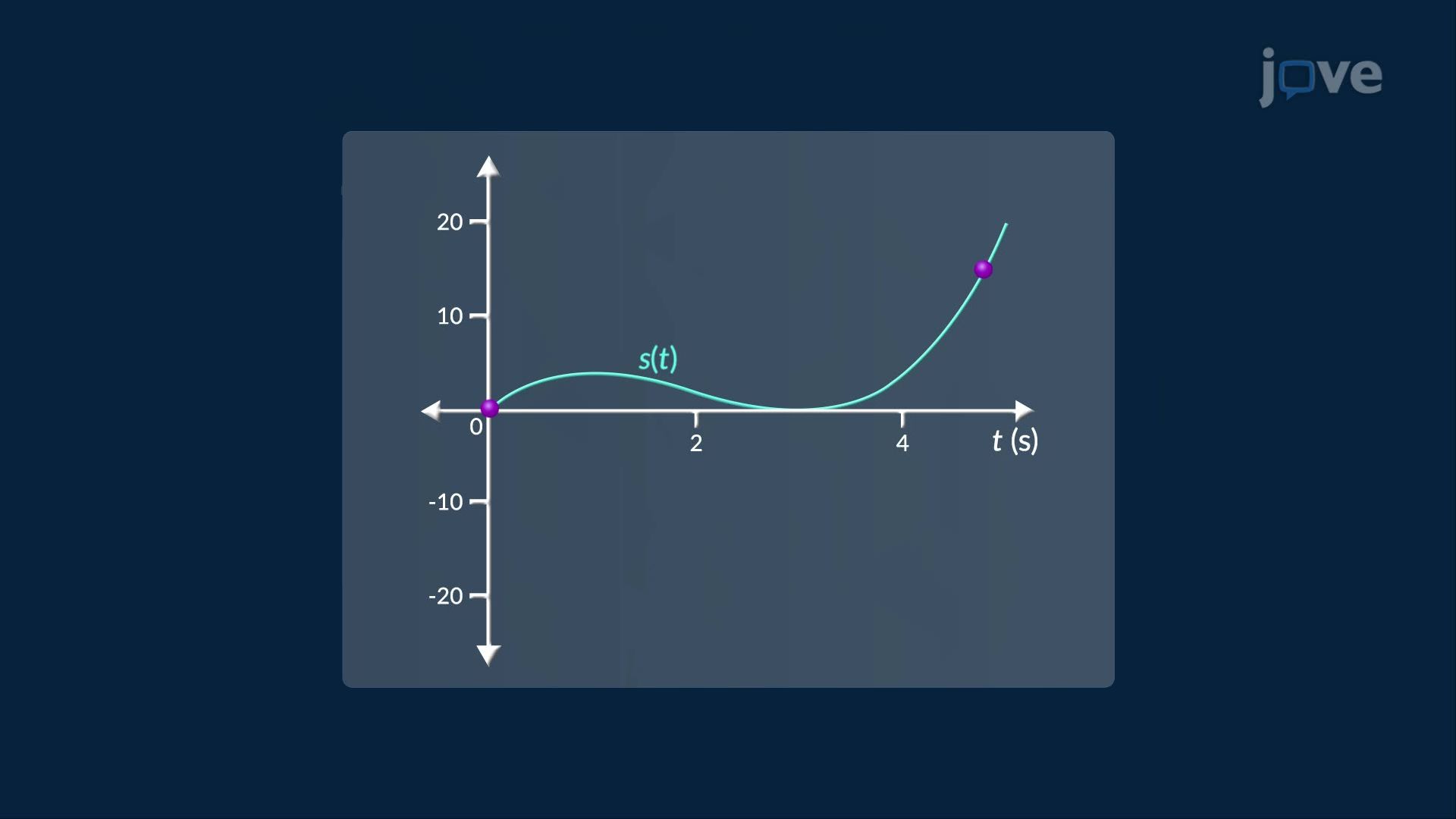
The position of a moving object varies with time. The rate at which this position changes at a specific moment is called the instantaneous rate of change.
Mathematically, it's equivalent to the derivative of that function at a point. Derivative is defined as the limit of the difference quotient as the interval approaches zero. It provides the slope of the tangent line to the graph at that point.
For example, consider the function defined by the square root of its input.
To find its derivative, take the square root of the input plus a small increment, subtract the square root of the original input, and divide by the increment.
To simplify further, multiply the numerator and the denominator by the conjugate of the numerator.
This process cancels out the radicals and simplifies into a simpler fractional form, leaving the expression to one divided by twice the square root of the input.
At inputs one and four, the slope is one-half and one-fourth, respectively. But at input zero, the tangent is a vertical line, which means its slope is undefined.

 繁體中文
繁體中文