In calculus, limit laws serve as foundational tools for evaluating the behavior of functions as inputs approach specific values. Among these, the laws concerning quotients, powers, and roots are particularly useful in breaking down complex expressions.
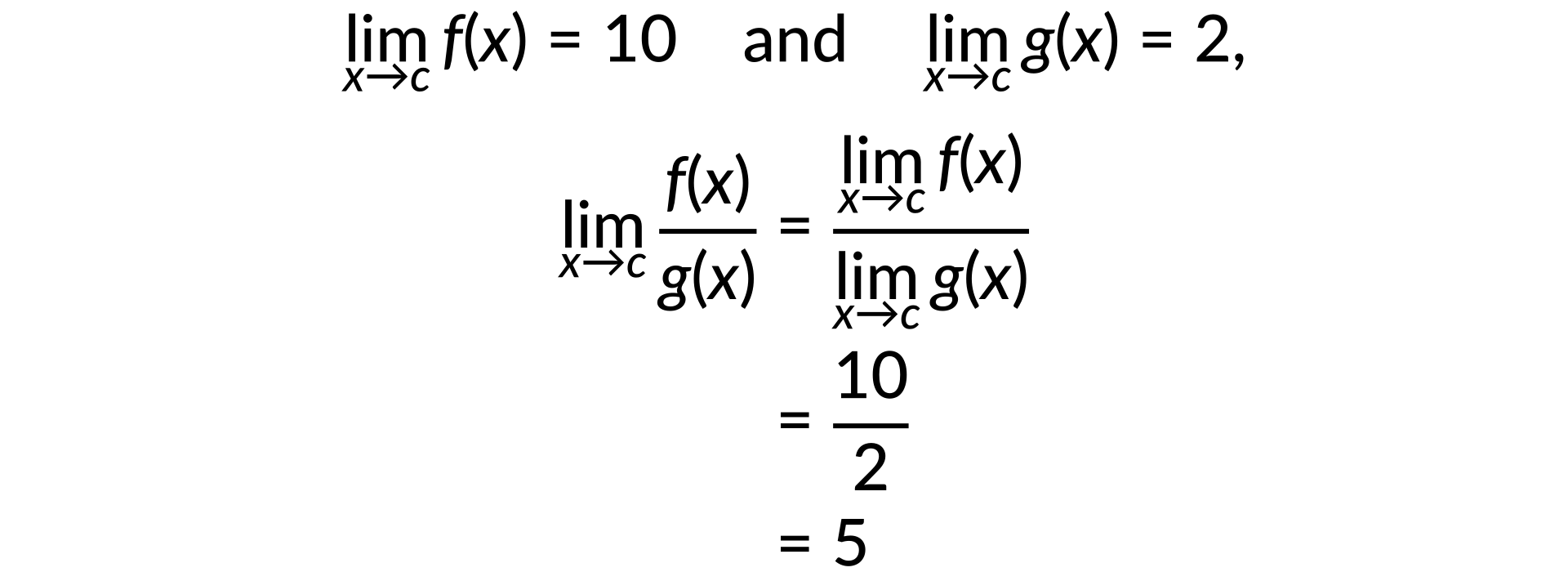
The Quotient Law allows the limit of a division between two functions to be calculated by dividing their individual limits, provided the limit of the denominator exists and is not zero. For example,
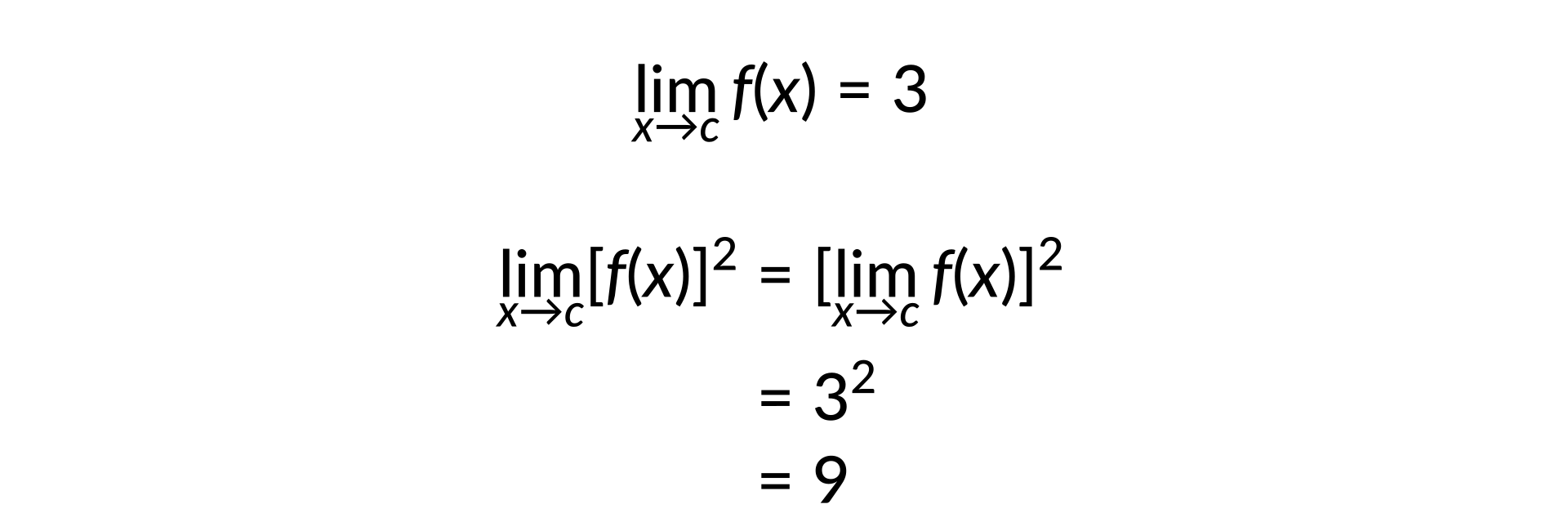
The Power Law states that the limit of a function raised to a positive integer power is the limit of the function raised to that power. For instance,
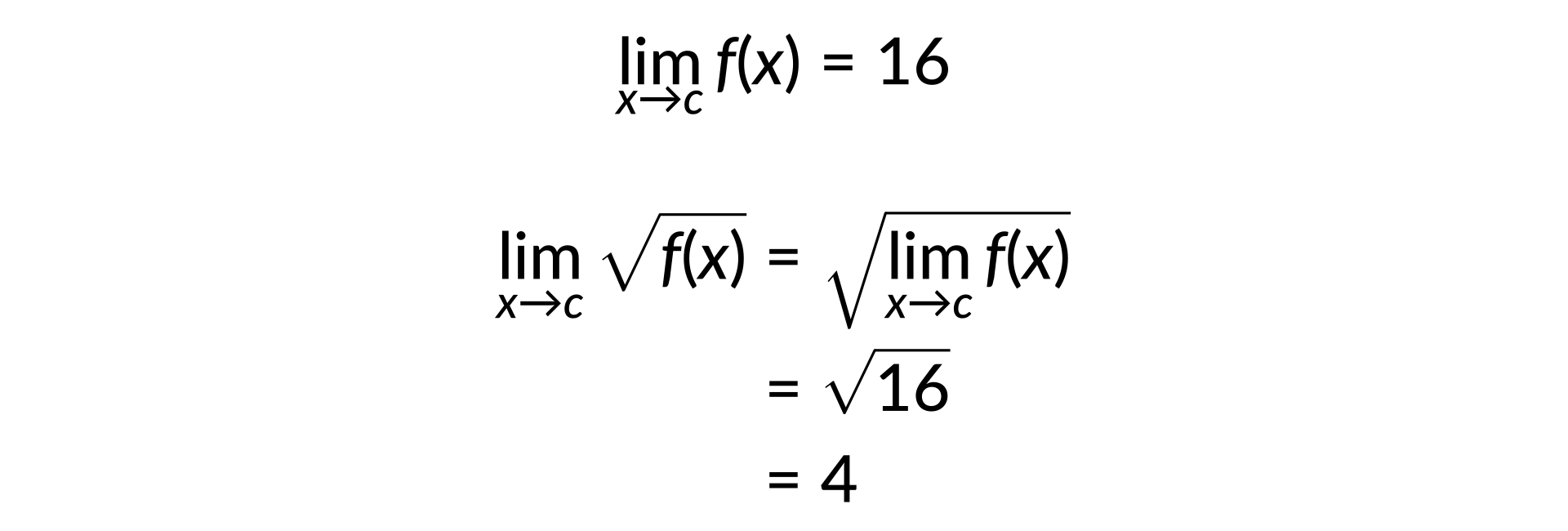
The Root Law applies to expressions involving roots and indicates that the limit of the nth root of a function equals the nth root of the function’s limit, assuming the limit exists and is non-negative for even roots. For example,
These laws streamline the process of limit evaluation, enabling systematic analysis of functions by reducing complex expressions into simpler components.
Basic limit laws involving quotients, powers, and roots help simplify complex expressions as variables approach specific values.
The Quotient Law states that the limit of a quotient equals the quotient of the limits, provided the denominator's limit exists and is not zero.
The Power Law states that if a function is raised to a positive integer power, its limit is obtained by raising the limit of the base function to that same power.
The Root Law states that the nth root of a function approaches the nth root of its limit, as long as the limit exists and is non-negative when n is even.
These laws apply to real-world scenarios, such as population density in a growing city, defined as the ratio of population to land area. As both quantities change over time, their limits model long-term behavior.
The Quotient Law finds the limit of density from the limits of population and area, if the area’s limit isn’t zero.
If infrastructure demand grows with the square of density, the Power Law gives its limiting value.
If per-person energy needs depend on the square root of the limiting value of demand, the Root Law applies, provided it is non-negative.

 繁體中文
繁體中文


