In IR spectroscopy, signals produced by the X−H bonds (such as C−H, O−H, or N−H) can be observed in the frequency range of 2700–4000 cm–1. The C−H stretching vibration forms sharp bands in the region 2850–3000 cm–1. The presence of the O−H stretching vibration leads to the forming of an absorption band in the frequency range 3650–3200 cm−1. At the same time, N−H stretching can be confirmed by absorption bands in the 3500–3100 cm−1 range. Even though both O−H and N−H bonds vibrate at a similar frequency range, the peak corresponding to N−H stretching vibrations has one or two sharp absorption bands of lower intensity. If the O−H group is present in the N−H region, it will appear as a broad absorption peak in the IR spectrum.
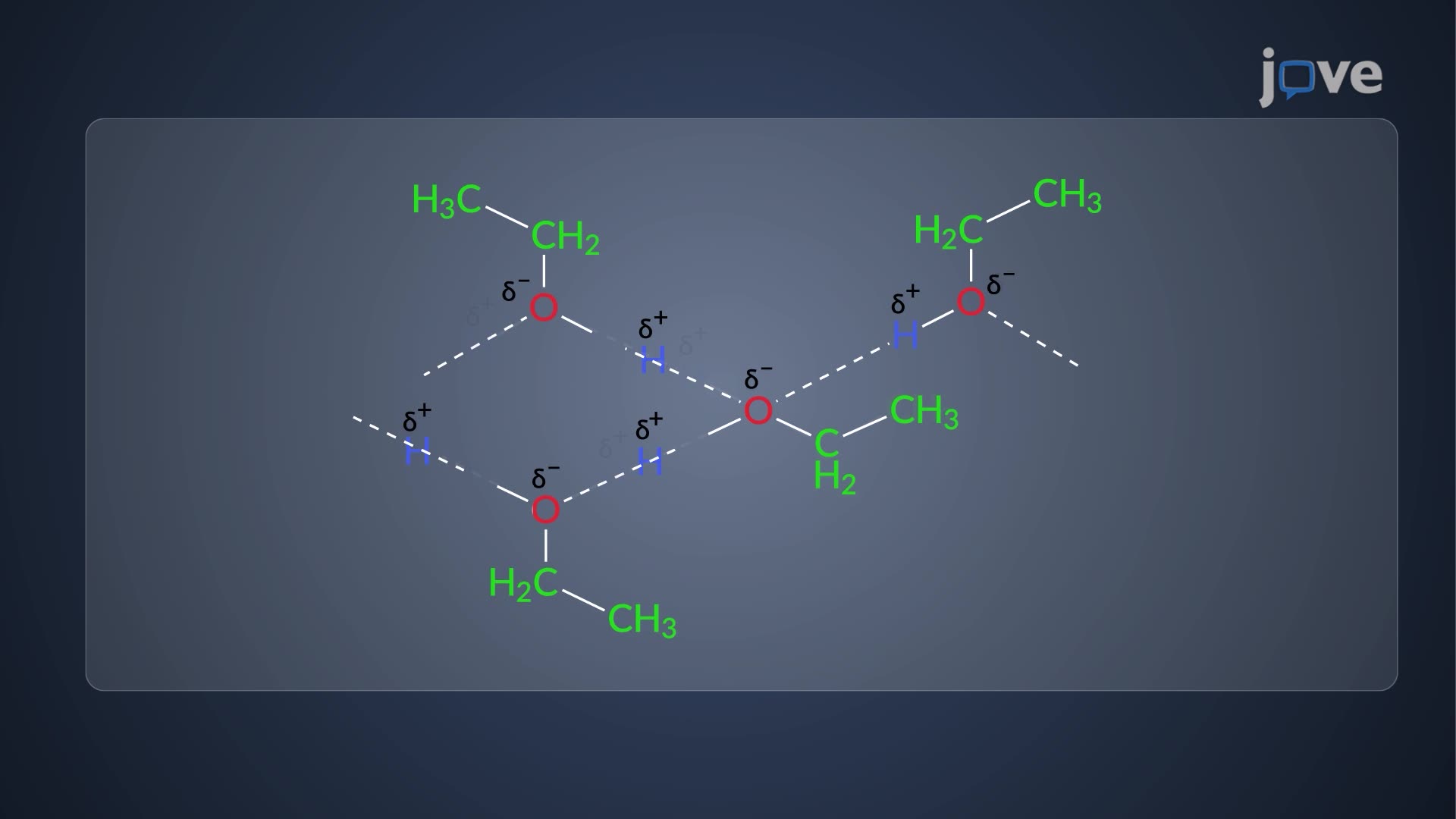
A sharp peak can confirm the presence of the free O−H stretching at 3650–3600 cm−1. A broad peak is observed at 3400–3300 cm−1 if the O−H groups are hydrogen-bonded. For example, in the IR spectrum of free alcohol, we can observe the peak at 3650–3600 cm−1, corresponding to free O−H stretching. However, when alcohol is dissolved in water, a broad peak will appear at 3400–3300 cm−1 due to the formation of hydrogen bonds between O−H groups. By comparing the absorption frequency of C–H, N–H, and O–H bonds, it is clear that the dipole moment of the bond has a significant effect on absorption frequency. The greater the change in dipole moment during the vibration, the more intense the absorption. For instance, the O–H stretching vibration is accompanied by a greater change in dipole moment than that of an N–H bond due to the higher electronegativity of oxygen atoms. Therefore, the O–H stretching vibration is more intense than that of their C–H and N–H counterparts.
Single or X–H bonds like C−H, O−H, and N−H give rise to absorption bands in the frequency range of 2850–3600 cm–1 in the diagnostic region of the IR spectrum.
C–H stretching peaks between 2850–3000 cm–1 exhibit multiple splitting and are strongly observed in alkanes.
Although N–H and O–H absorption regions overlap, their respective shapes distinguish their peaks.
N–H stretching vibrations appear as one or two sharp bands of lower intensity in the range of 3300–3500 cm–1. For instance, primary amines, like 1-butanamine, exhibit two sharp lower intensity peaks because of symmetric and asymmetric N–H stretching.
O–H peaks corresponding to hydrogen-bonded O–H are broader and appear in the frequency range of 3200–3500 cm–1. In contrast, those not participating in hydrogen bonding are narrow and appear near 3600 cm−1.
Overall, the O–H stretching vibrations are more intense in nature as they are accompanied by a greater change in dipole moment.

 繁體中文
繁體中文