Gas chromatography (GC) relies on stationary phases to separate and analyze components in a sample. There are two main types of stationary phases: liquid and solid. Liquid stationary phases are non-volatile, thermally stable, and chemically inert liquids coated onto the column. Solid stationary phases are particles of adsorbent material, such as silica gel or molecular sieves.
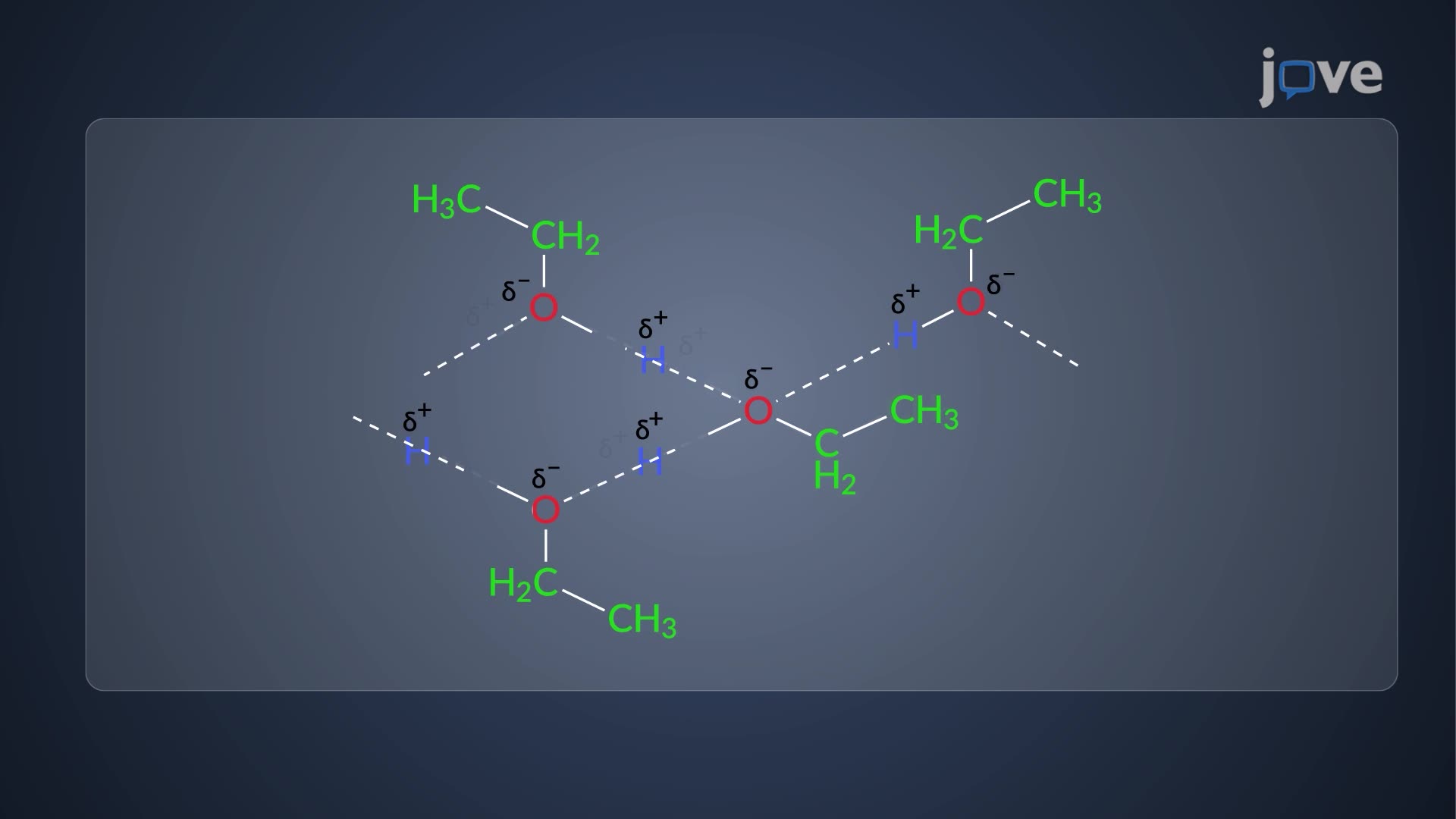
For an analyte to remain on the column for a sufficient amount of time, it must exhibit some level of compatibility (or solubility) with the stationary phase. This is based on the concept that substances with similar polarities tend to dissolve in each other, a concept summarized as "like dissolves like." The term "like" in this context refers to the similarity in polarities between the analyte and the immobilized liquid. The polarity of a molecule, which is indicated by its dipole moment, measures the electric field generated by the charge separation within the molecule. Polar stationary phases include functional groups such as CN, CO, and OH. Hydrocarbon-based stationary phases and dialkyl siloxanes are considered nonpolar, whereas polyester phases are noted for their high polarity. Polar analytes typically include substances such as alcohols, acids, and amines, while solutes with medium polarity might include ethers, ketones, and aldehydes. Saturated hydrocarbons fall into the nonpolar category. In general, the polarity of the stationary phase should align with the polarity of the sample components. When there is a good match, the sequence in which substances are eluted usually depends on the eluents' boiling points.
Capillary columns, or open tubular columns, are commonly used for their efficiency in gas chromatography. These columns come in three types: Wall-coated open tubular (WCOT) columns have a liquid stationary phase coated on the inner wall of the column. These columns have a high sample capacity and provide high resolution, making them ideal for separating complex mixtures. Support-coated open tubular (SCOT) columns have a layer of solid support coated with the liquid stationary phase, which is then bonded to the inner wall of the column. This design provides increased stability and efficiency compared to WCOT columns. Porous-layer open tubular (PLOT) columns are used in gas-solid chromatography and have solid stationary phase particles coated onto the inner wall of the column. These columns have high surface area and retain analytes via adsorption, resulting in large distribution coefficients and efficiencies. However, the non-linear adsorption process results in severe tailing of elution peaks, so PLOT columns are mainly used for permanent gases and small polar molecules not retained by gas-liquid columns. The design of open tubular or capillary columns provides faster gas flow rates and higher resolution, making them ideal for analyzing complex mixtures. However, they have lower sample capacity and are more prone to column bleed. In this process, the polymer that makes up the column's stationary phase degrades and is subsequently eluted alongside sample analytes, which can contaminate the sample.
Packed columns containing solid support particles offer higher sample capacity, making them more helpful in analyzing larger sample sizes than open tubular columns. However, they have lower resolution and longer analysis times due to the slower gas flow rate caused by the solid support particles. The solid support can cause peak broadening and tailing, reducing the separation efficiency.
In gas-liquid chromatography, nonpolar liquid stationary phases, such as dialkyl siloxanes, are used for less polar solutes, while polar liquids are chosen for polar solutes.
The stationary phase is usually stabilized on open tubular or capillary columns, which enable a high gas flow rate due to the open flow path.
In wall-coated open tubular columns, the liquid stationary phase is coated on the inside wall of the column.
In support-coated open tubular columns, the liquid stationary phase is coated on a layer of solid support that is bonded to the inner column wall.
Porous-layer open tubular columns with solid stationary phase particles coated onto the inner wall are used in gas-solid chromatography.
While capillary columns provide high resolution, high sensitivity, and short analysis times, they have low sample holding capacity.
For increased capacity, packed columns, which are usually coiled tubes filled with particulate solid support that holds the liquid phase, are preferred.
Although packed columns provide low resolution, decreasing the particle diameter can improve column efficiency.

 繁體中文
繁體中文