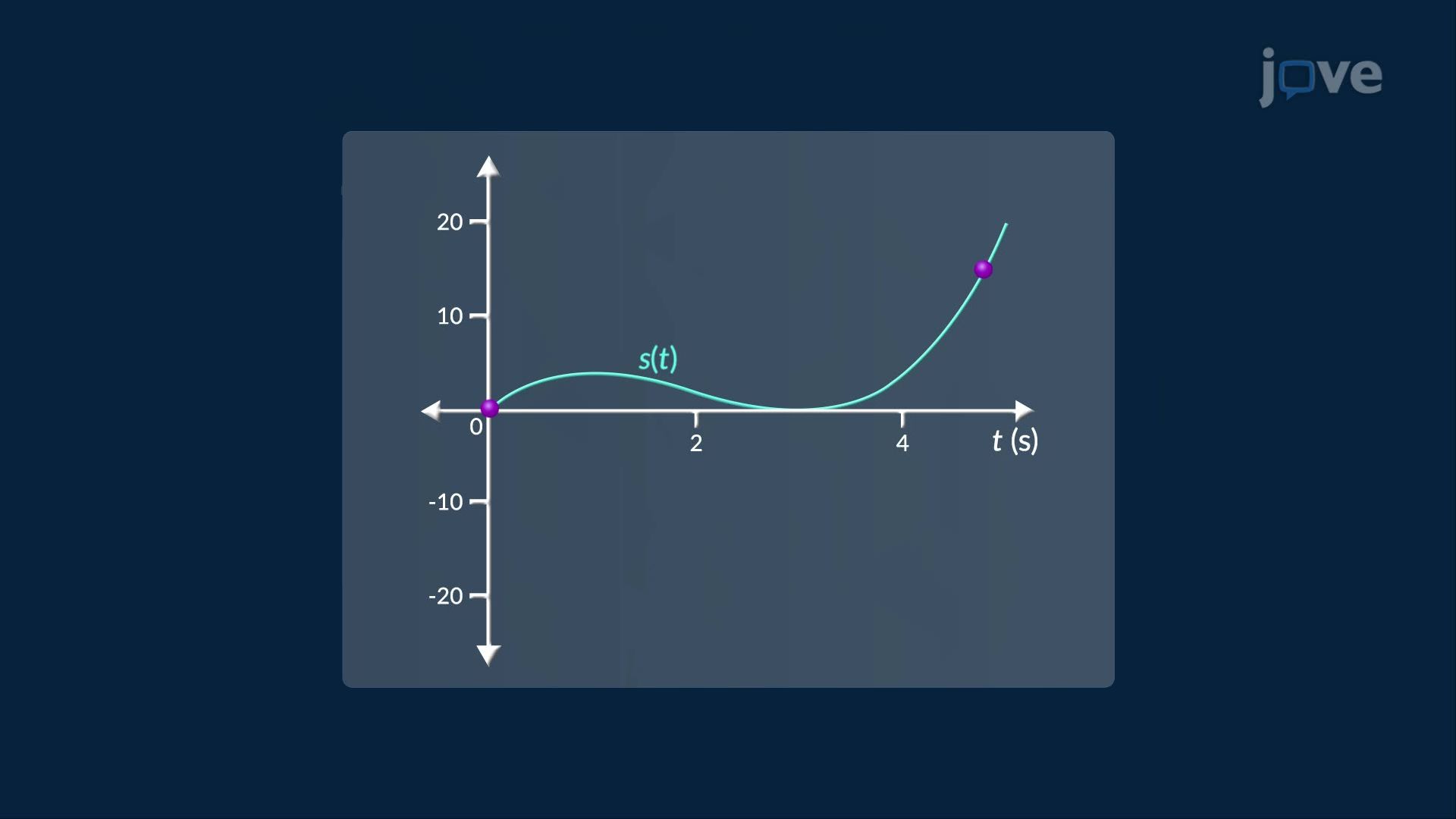
The Mean Value Theorem establishes a fundamental connection between the overall change in a quantity and its change at a specific instant. It formalizes the idea that average change over an interval must be reflected by instantaneous change at some point within that interval. When a function behaves smoothly across a range, the theorem guarantees that this connection always exists.
This relationship is captured mathematically by the Mean Value Theorem, as stated below.

The meaning of this result can be understood through a real-world example involving motion. Consider a vehicle traveling between two points along a road. Its velocity may vary throughout the trip, starting slowly, increasing during acceleration, and decreasing as it approaches the destination. Although the velocity is not constant, the overall change during the trip can be averaged over the entire distance or time.
Geometrically, the average change corresponds to the slope of a straight line connecting the start and end points of the motion, while the instantaneous change corresponds to the slope of a line that just touches the motion curve at a single moment. The theorem guarantees that at least one such moment exists where these two slopes are equal.
In physical terms, this means there is at least one instant during the journey when the vehicle’s instantaneous acceleration exactly matches its average acceleration over the entire interval. This result establishes a rigorous connection between average behavior and instantaneous behavior, playing a central role in understanding motion and change in applied mathematics and engineering.
The Mean Value Theorem establishes a relation between a function's average rate of change over an interval and its instantaneous rate of change at some point within that interval.
The Mean Value Theorem states that if a function is continuous on a closed interval and differentiable on the open interval, then there exists at least one point c in the open interval where the instantaneous rate of change is equal to the average rate of change between the endpoints a and b.
To relate this to a real-life example, consider a vehicle driving along a road between two points: its velocity is low initially, increases midway, and decreases toward the end.
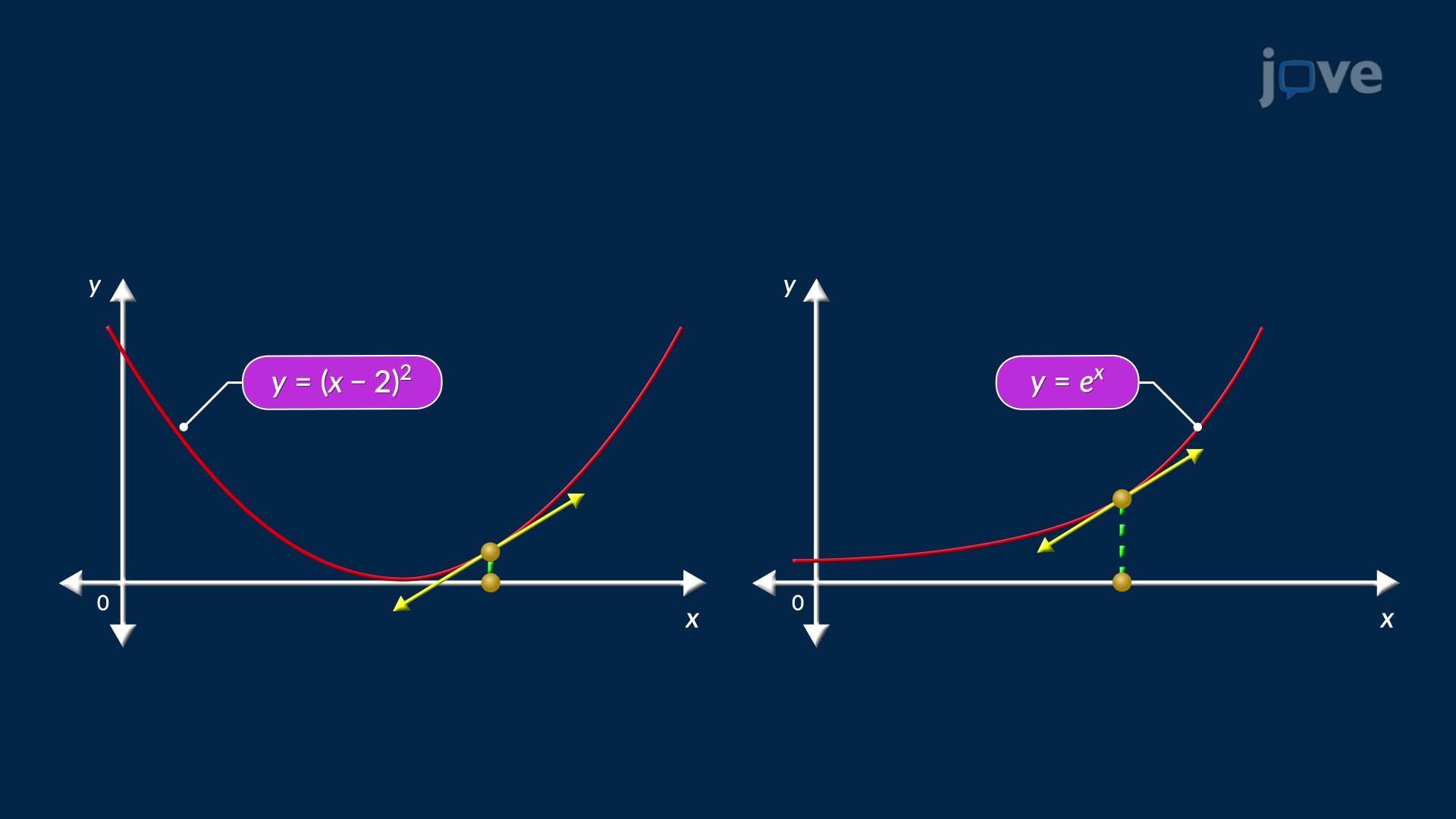
A tangent line touches the curve at a single point, and the slope of this line gives the instantaneous rate of change of velocity at that moment. The slope of a secant line, which passes through two points on the curve, shows the average rate of change of velocity between those points.
This secant slope equals the overall change in the function's value along the closed interval divided by the interval's horizontal length.
The theorem guarantees that, at least one moment during the trip, the instantaneous acceleration must have been exactly equal to the average acceleration.

 繁體中文
繁體中文