Understanding the behavior of a function through its first and second derivatives is essential for analyzing its graph. Derivatives provide insight into where a function increases or decreases, where it attains local maxima or minima, and how its curvature behaves across different intervals.
The first derivative of a function reveals the slope of the tangent line at any given point. Points where the derivative is zero or undefined are considered critical, as they often indicate potential extrema or changes in behavior. A local minimum occurs where the first derivative changes from negative to positive, while a local maximum is found where it changes from positive to negative. If the derivative does not change sign at a critical point, no extremum is present.
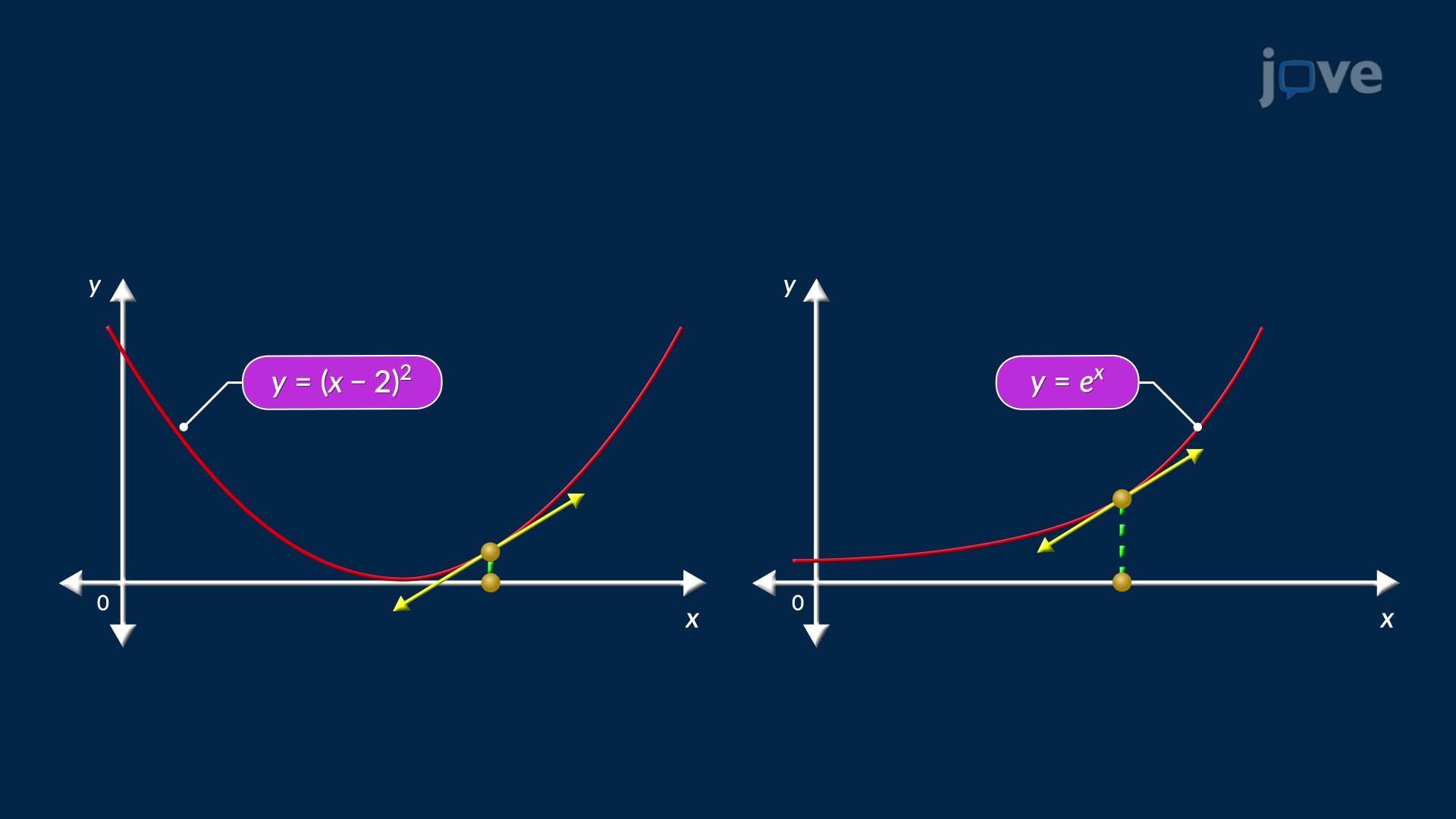
The second derivative offers information about the concavity of the function. When the second derivative is negative, the graph is concave downward, indicating that the slope of the first derivative is decreasing. This results in a curve that bends downward. Conversely, a positive second derivative implies the function is concave upward, with the slope of the first derivative increasing and the curve bending upward. Changes in concavity suggest the presence of inflection points, where the nature of the curve shifts from one type of concavity to another.
By examining the signs and behaviors of the first and second derivatives over different intervals, it is possible to construct an accurate sketch of the function. This combined approach helps identify regions of increase or decrease, locate local maxima and minima, and determine the overall shape of the function’s graph.
For example, consider a profit model represented by a quadratic function:

The graph represents a profit curve, where x denotes advertising spend in thousands of USD, and P(x) represents profit also in thousands of USD. The curve forms an inverted U shape, resembling a hill. In mathematical terms, this shape is described as concave downward.
At low advertising levels, increasing spending boosts sales and profit efficiently. However, as spending continues to rise, the additional profit generated by each new unit of advertising begins to decline. This reflects diminishing returns. If spending becomes too high, profit eventually decreases because the cost of the extra advertising exceeds the revenue it generates.
The slope of the curve is captured by the first derivative, and the maximum profit occurs at the point where this slope becomes zero. At this spending level, the curve reaches its highest value.
The second derivative of the function is a constant negative number. A negative second derivative indicates that the entire curve is concave downward, confirming that the profit function bends downward at every point.
Consider a function; its first and second derivatives are used to sketch its curve.
The first derivative is zero when x equals four, and undefined when x equals zero or x equals six. These critical points define the intervals for analysis.
The sign of the first derivative determines if the curve is increasing or decreasing.
A sign change from negative to positive at x equals zero gives a local minimum.
A change from positive to negative at x equals four gives a local maximum. If the sign does not change at x equals six, no extremum exists there.
The second derivative is negative on the intervals from negative infinity to 0 and from 0 to 6, which shows that the plot is concave downward on these intervals.
But the second derivative is positive on the interval x greater than six, which gives the concave upward plot on this interval.
For example, consider a profit function. The first derivative tracks the profit's rise or fall and identifies its extreme values.
The second derivative shows how the rate of profit changes, which helps sketch the function.

 繁體中文
繁體中文