In calculus, the computation of the area under a continuous curve has been fundamentally simplified by applying the Fundamental Theorem of Calculus, Part 2. Rather than relying on the limiting process of summing infinitely many infinitesimal rectangles, this theorem permits direct evaluation using antiderivatives, thereby streamlining the process of definite integration.
The Fundamental Theorem of Calculus, Part 2, states that if a function f(x) is continuous on a closed interval [a, b], then the definite integral of f over that interval can be computed using any of its antiderivatives F(x). Mathematically, this is expressed as:

This result depends on the fact that all antiderivatives of a function differ only by a constant. Since this constant cancels out when evaluating the difference F(b) - F(a), any antiderivative can calculate the integral, greatly enhancing computational flexibility.
It is crucial to note that the function f(x) must be continuous throughout the interval [a, b]. The presence of discontinuities or points where the function is undefined within the interval nullifies the theorem’s applicability. In such cases, the definite integral may not be well-defined using this method, and alternative techniques or careful piecewise integration must be employed.
This theorem effectively transforms integration from a process based on summing infinitesimal quantities to evaluating function values at specific endpoints. It serves as a cornerstone of integral calculus, enabling analytical solutions to various problems in mathematics, physics, and engineering
The second part of the Fundamental Theorem of Calculus connects antiderivatives with definite integrals. It finds the exact total accumulation of a function's rate over a specific interval.
If a function is continuous on a closed interval, the definite integral equals the antiderivative's value at the upper limit minus its value at the lower limit.
This avoids Riemann sum approximations, which estimate the area using many narrow rectangles under the curve.
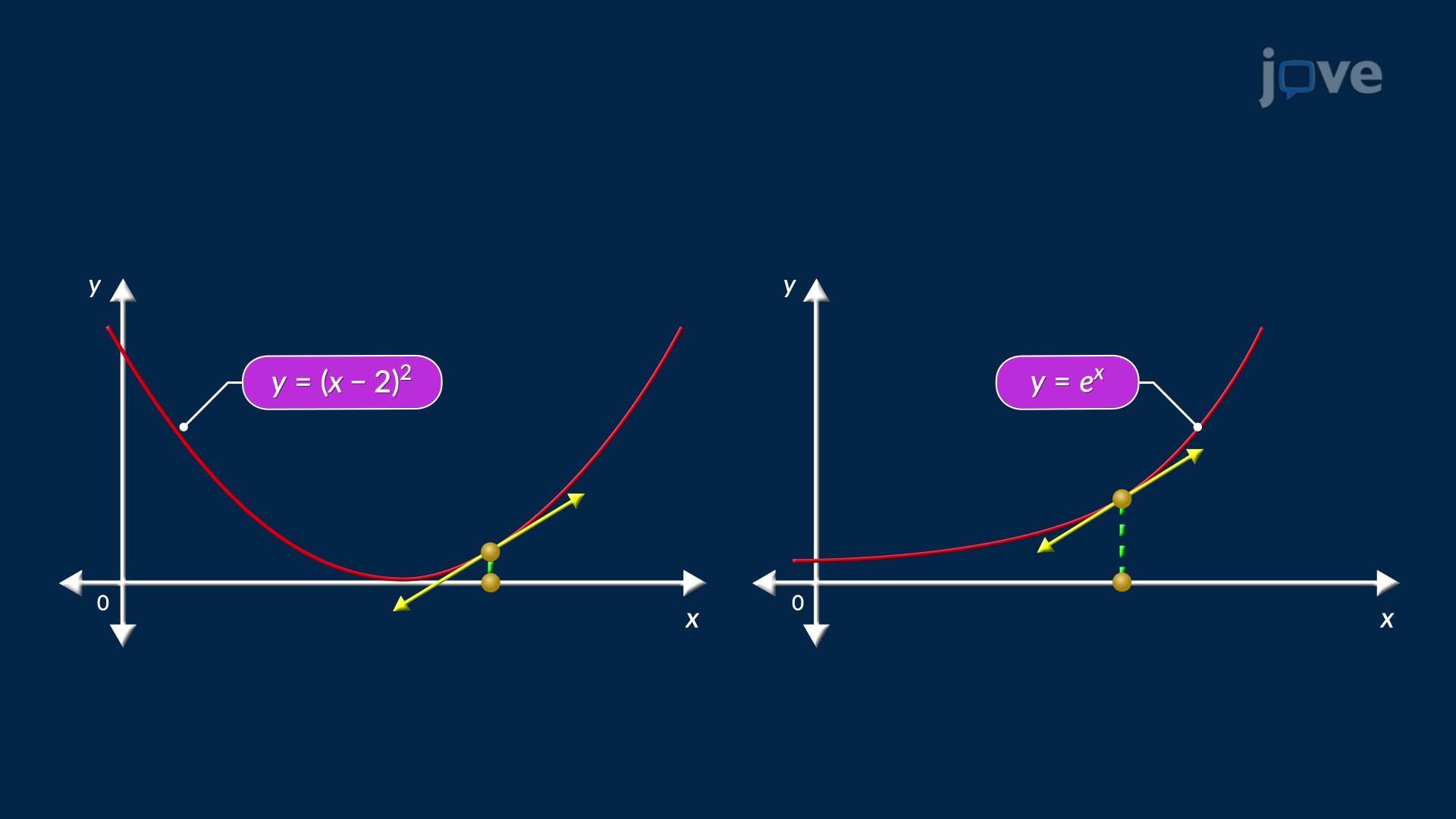
The antiderivative chosen does not affect the final result. For instance, G of x may differ from another antiderivative by a constant C, but C cancels when subtracting values at the interval’s endpoints.
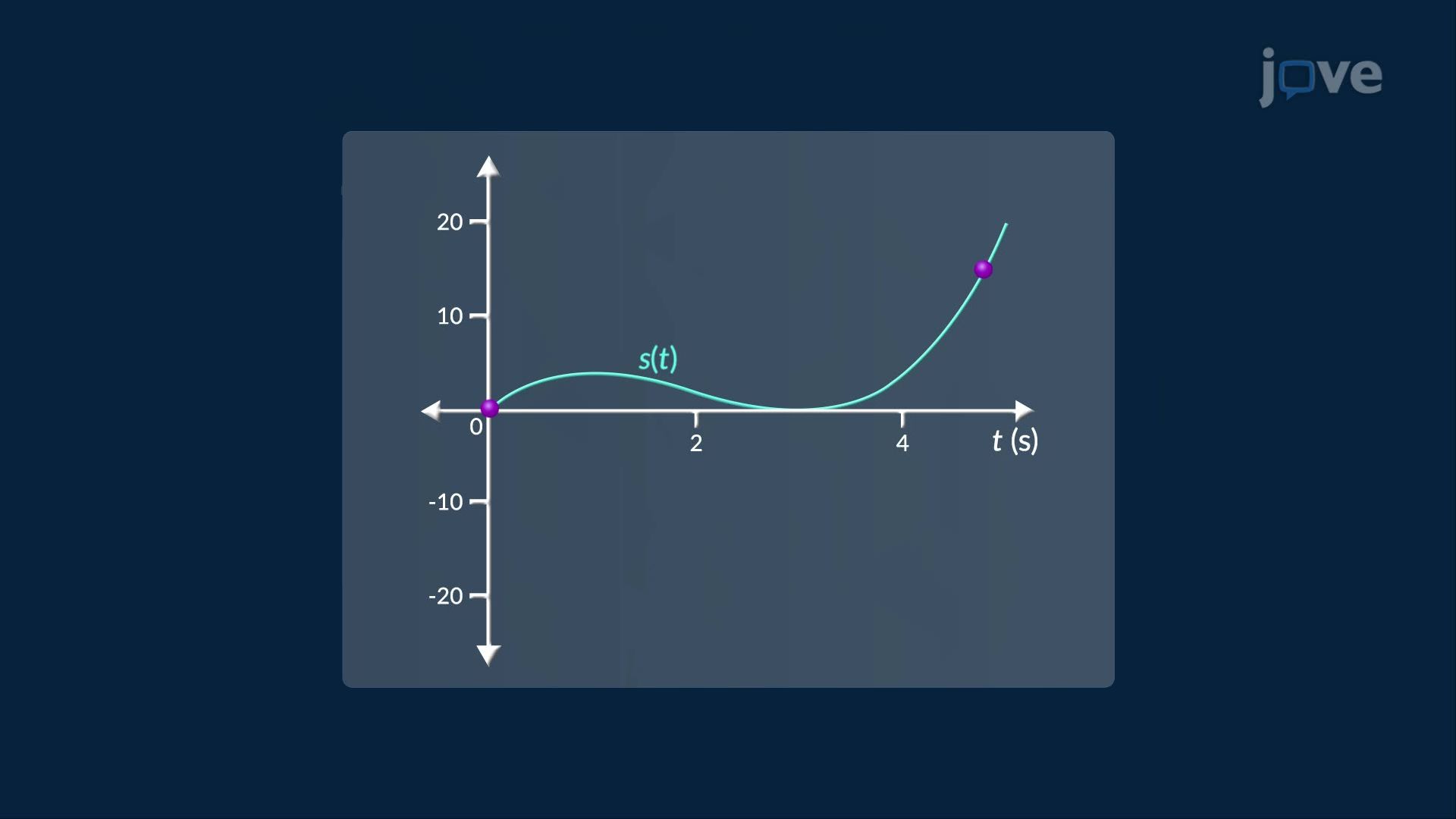
A common application is finding an object’s net displacement using its velocity function.
The net displacement for a given time interval, starting from 1 second to 4 seconds, is the area under the velocity-time graph.
To calculate this, first find the antiderivative of the velocity function—this gives the position function. Then, using the theorem, evaluate the position at the interval’s endpoints. Subtract the value of the position function at 1 second from its value at 4 seconds to get the net displacement.

 繁體中文
繁體中文